
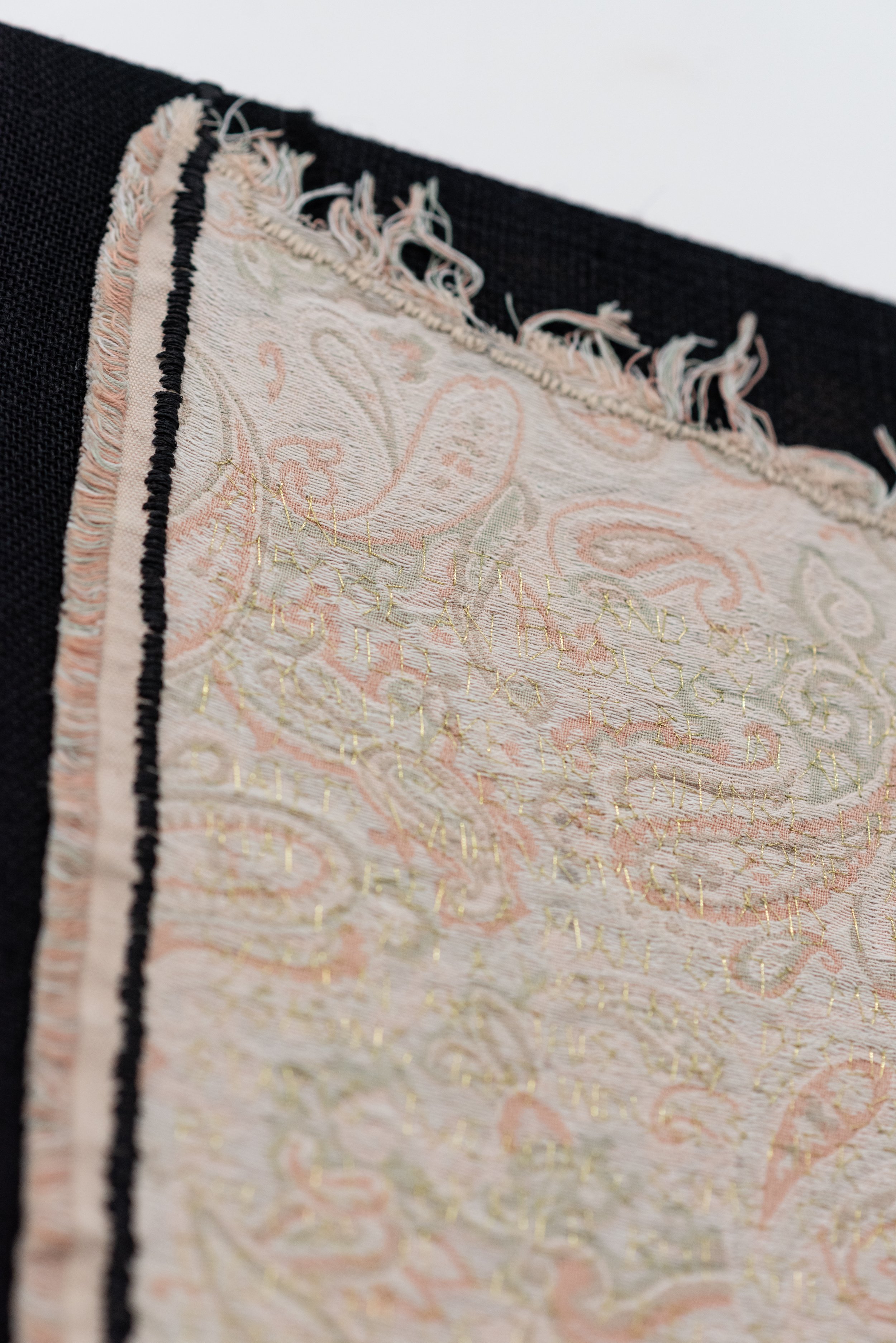
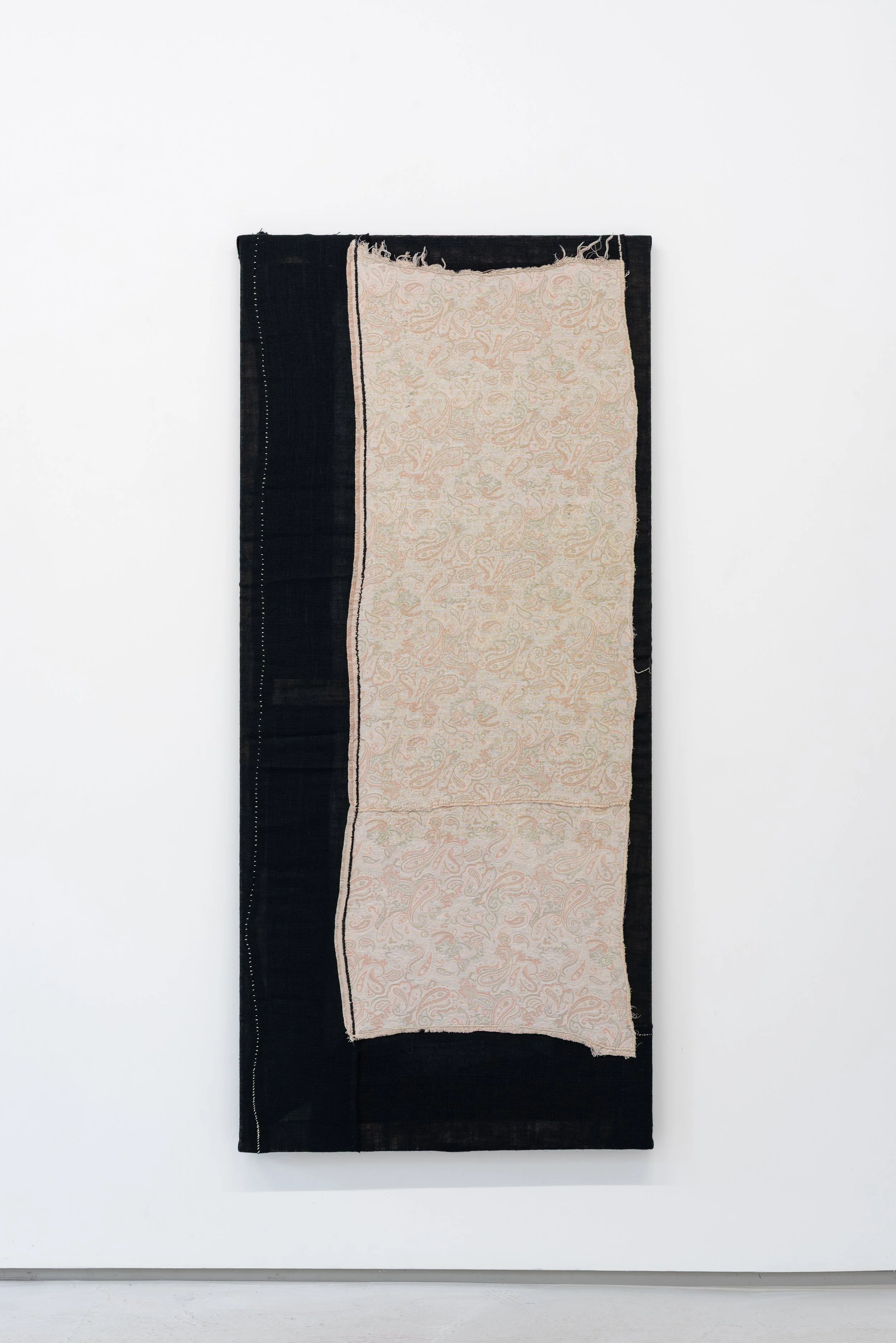
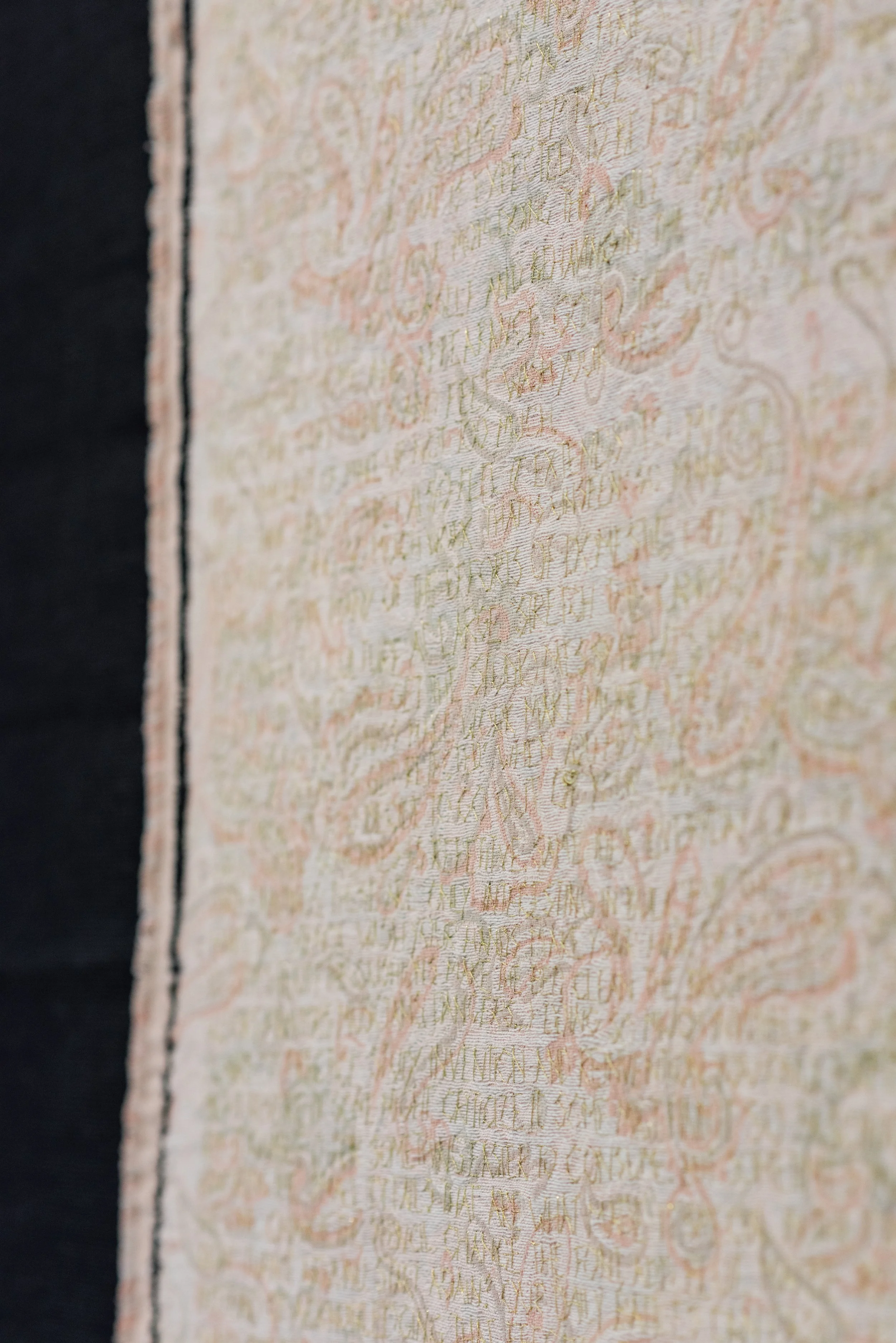
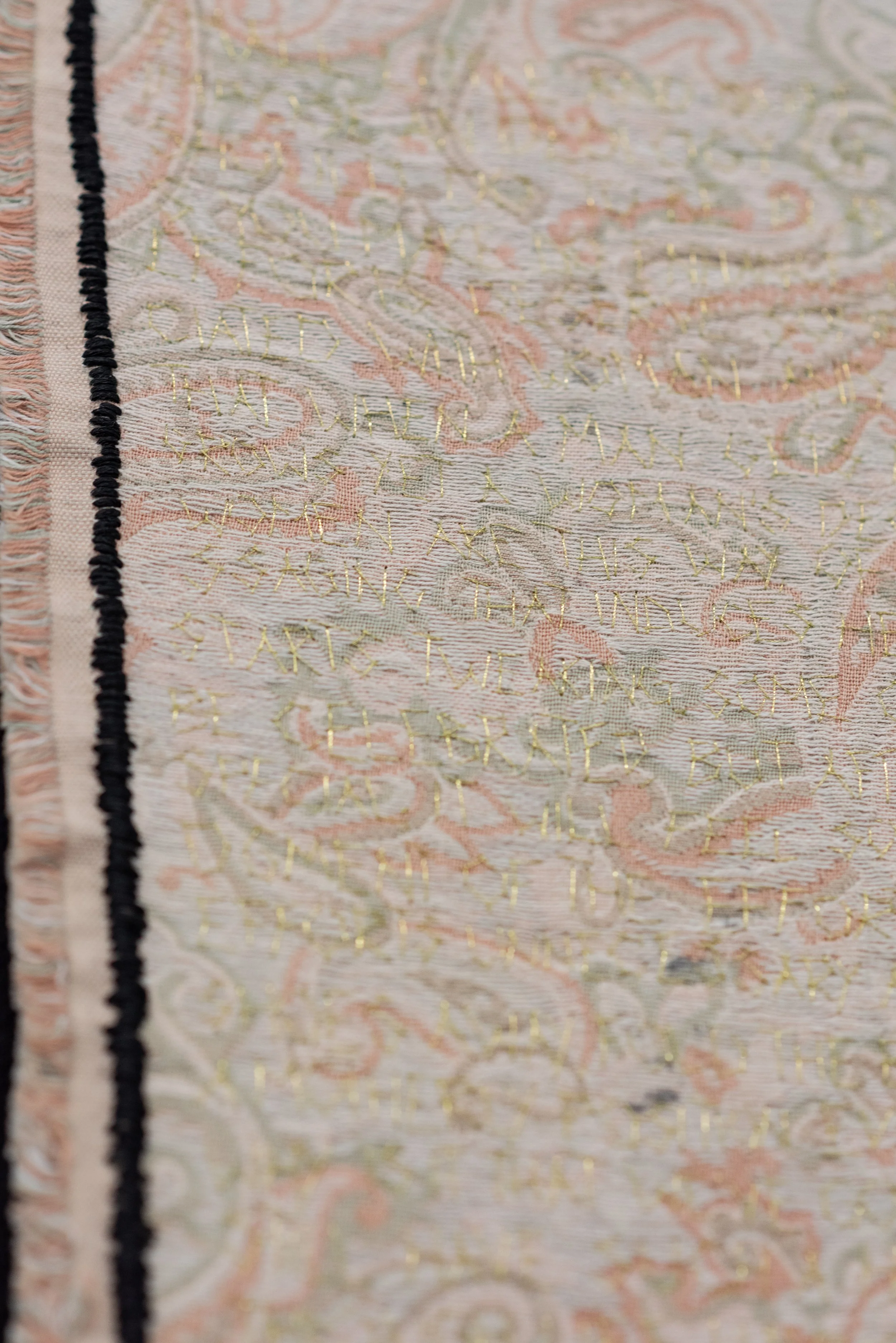
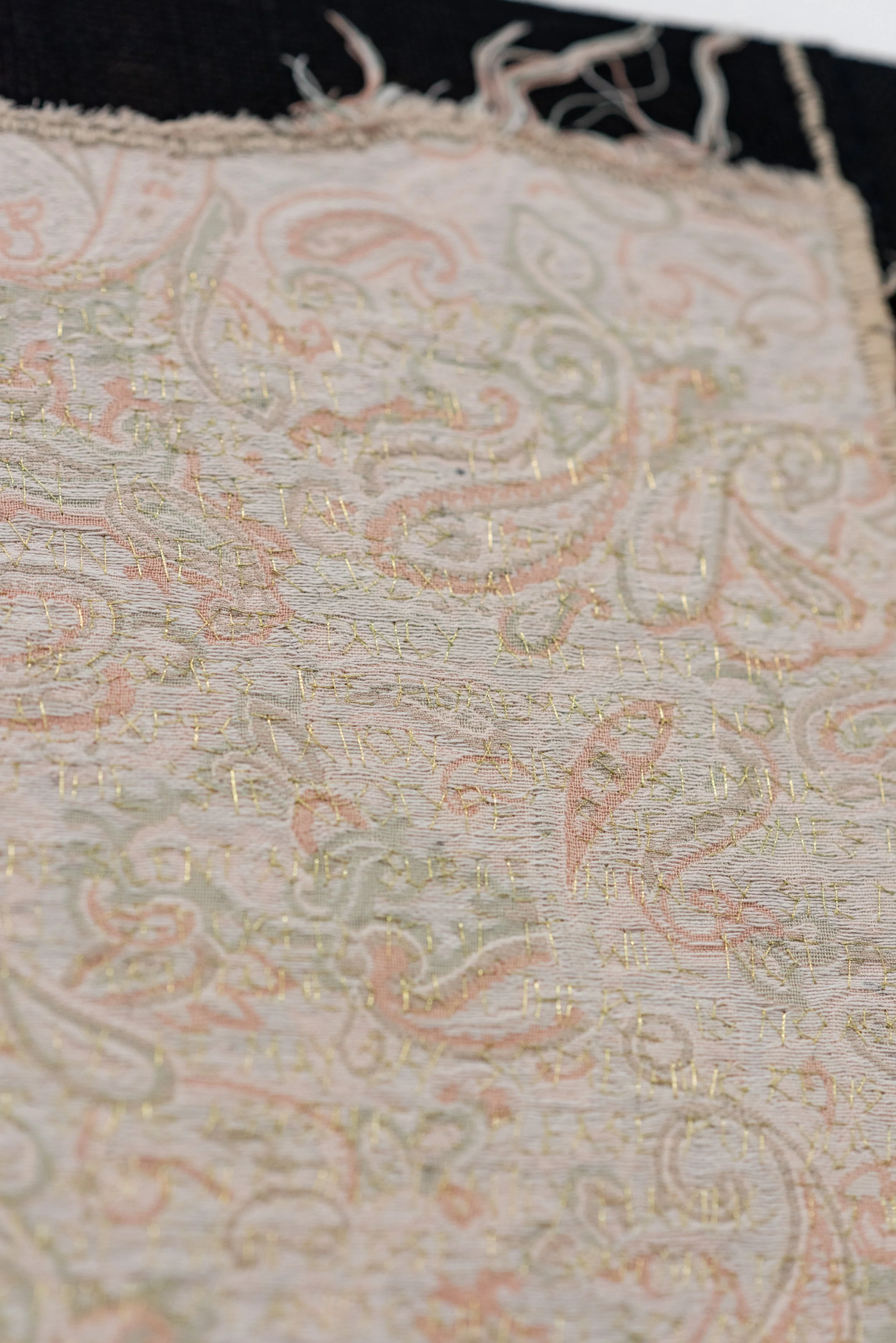
1200+ words and embroidered onto fabric from my grandmother’s house.
‘Stop and smell the roses’ is about the invisible labour of women, artists and migrants. The embroidered text mimics what we do by being itself almost invisible.
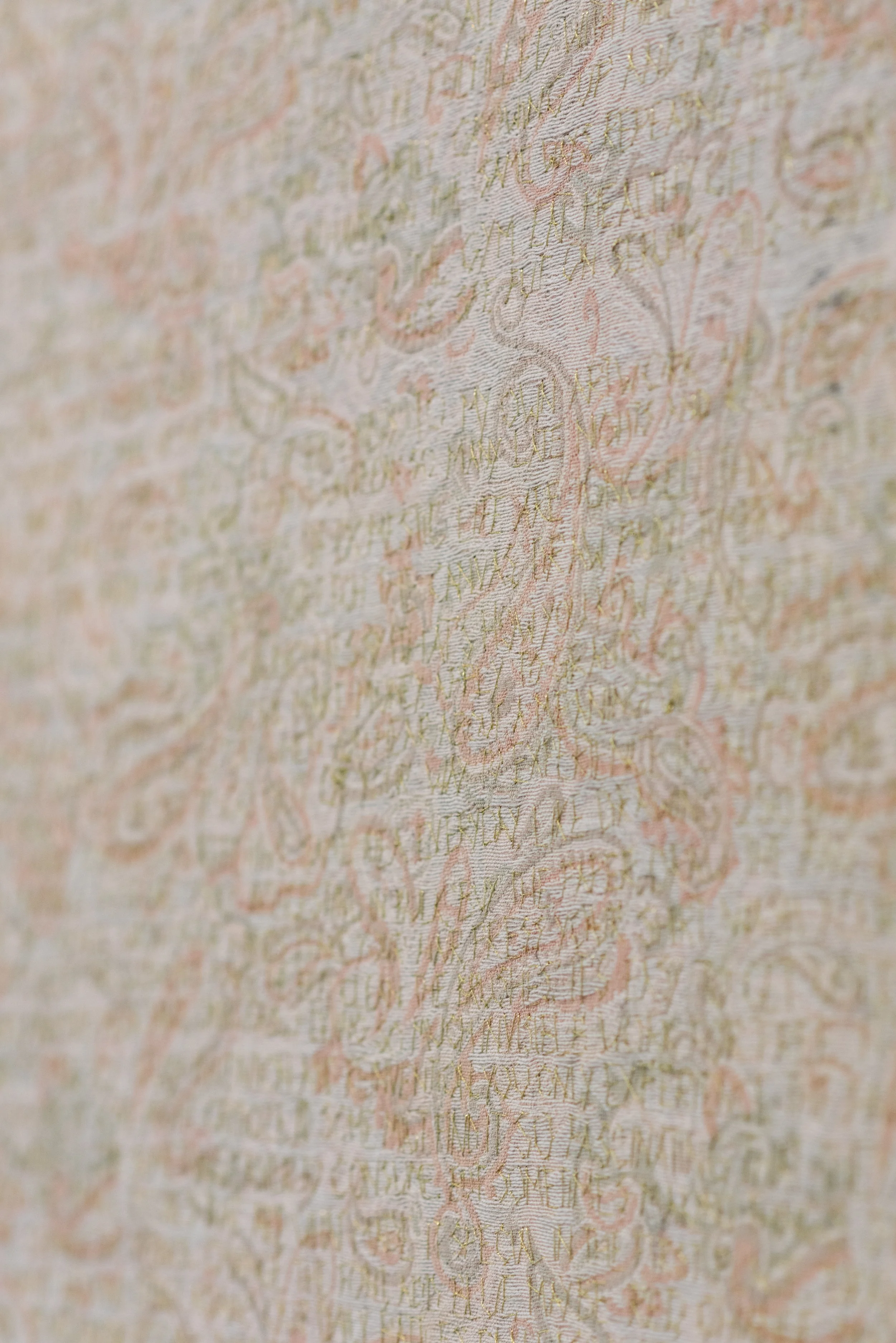
Small, little and quiet acts are what make life special. No, I do not want to impose an ideology of taste or handout a list of “do’s and don’ts” on what you should do to be in an extraordinary wavelength; but, the little daily contributions you make do enhance life and what I do believe is that these small yet invisible efforts deserve some appreciation. This attention to detail is typically associated with women and I be- lieve it’s why they say (in heterosexual relationships) that when a man gets married/lives with a partner his life expectancy and happiness grows yet a woman’s declines. Why?. She automatically becomes the homemaker. Not all women are this way, of course, yet, there is a societal expectation and sublimi-
nal messaging that induces her to transform and adapt into the “stereotype”. She comes in and starts tweaking. Some changes are loud, some are more silent and subtle. Initially she might be celebrated, but after some time has passed, he will get used to it. It will not feel special; it will feel so automatic that the expectation is maintained but there is no acknowledgment of the effort. It is just what we do. Eventual- ly, he may say something rendering her efforts unnecessary and even erratic if he is bothered for some assistance: “Please put your shoes away, fold the blanket, fluff the cushions”. Why are women constantly having to inhabit a motherly position even when they are not mothers or not even close to wanting to be one?
Why is it that we’ve gone through multiple waves of feminism and gained so much yet we still have such a high expectation in everything that is considered “domestic”. We go through life having to raise ourselves, and others as well. “Make the bed, cut your hair, make the breakfast, fluff the cushions”. We go through life having to still ask for permission, and if we don’t, we are not firm, we are aggressive. We have to be bold and do all the visible jobs while also working on all the invisible tasks we’ve been taught to assume. “Get dressed, put on make-up, do your hair, cut and dye it, clean your nails, wash your face, put on serums, oils, creams, sleep face-up”. All these invisible tasks accumulate into an unpaid second job that is expected to be fulfilled with minimal external contribution. We get used to it, you see your mom doing this while growing up and you rarely think about it until you start living by yourself and behaving in the same ways, repeating these small tasks to keep a composed home and appearance. “Go to the gym, eat healthy, get a haircut, dye it, style it, nails done, soft hands and feet, wash your face, SPF, put on serums, oils, creams and just the right amount of make-up, not too much”.
When I think about this, I also feel it extends to my own art work and practice in general. I see creatives doing so much work that is unseen: so many late nights and rejected efforts. In the same way that many of the efforts of domestic life are ignored, this pattern can also be extended to culture at large. “Stretch the canvas, draw, paint, embroider, buy materials, clean-up the studio, get the studio messy (that’s how you know you’ve been working), read, go to shows, go to openings, make work, make money, apply to grants, get rejected, apply to prizes, shows, residencies, get rejected”. When you hear about a meaningful artwork, you notice it, you talk about it, you decide to go out of your way to experience it... but maybe you get used to it. Great work sometimes is repetitive. Same idea everyday, like drawing 250 bags a day or On Kawara’s date paintings. These are only interesting in bulk. “Buy the paper, draw the bag, stretch the canvas, make the stencil, wash your hands, make your hair, press your shirt, wash your face, wash the clothes, fluff the cushions, make the bed, clean the brushes”. It’s easy to get used to artists (writers, actors, painters, musicians, dancers...) doing so much invisible work for free. It’s easy to ignore years of practice, study, invention and reinvention. You only experience the final outcome. Some might revere
it, some might criticize it. Some might find it so fascinating that they want to transform it. Change it for something easier to consume. But sometimes making things simple requires ignoring the small details that are what made it special in the first place. “Draw the thing, pivot the line, change the stencil, change the font, add blue, maybe red, change materials, shift it right, turn it around, start again”. Our daily bat- tles can easily be gaslit obsessive behavior instead of acknowledging that effort with less efficiency can bring higher silent rewards. “Make the bed, change the sheets, fold the blanket, fluff the cushions, clean the dishes, wash your face, SPF.” We are all doing things that are unseen but quietly contribute to society. These contributions are probably enjoyed, assumed they will remain, but most people might ignore the reality of how they came to appear in the first place. Likewise, I see migrants doing the same: multiple jobs, jumping through a million hoops to try to have a normal life while being far away from home. “Make the bed, clean the floors, wash your face, make your hair, learn the language, follow customs, send money back, miss-out on events, go to work, never stop, cry alone, donate, pay taxes, wash your
face, go to work, drink tea, cry alone, straighten your hair, learn the accent, read the books, learn the politics, follow the news back home, do it alone”. They live separate lives in one body. Two continents and experiences in one body all of which rarely overlap. We deal with internal battles and long-distance tragedies while continuing with life as is. It is women, artists and migrants who come into a society to quietly contribute. They all slowly work menial jobs that no one wants to do but that if they stop, things change. “Cut the grass, clean the floors, make the coffee, wash the clothes, make the beds”. Mothers feed and raise their kids. Women maintain households so that they and their partners are able to go out into the world with a leveled head. “Make the bed, fluff the cushions, wash the dishes, wash the clothes, feed the kids, do the homework, feed the dog, dye your hair, get nails done”. Artists digest and reflect on the world around them and help the rest of us understand it. And migrants, adapt, learn about the culture, interpret it and add things to it. In this way, they maintain the world like a global exchange, the exact thing that has happened through the history of civilization: people move and bring inventions with them. They bring different knowledge. They clean and build. They raise the children, theirs and those of others. They bring in new foods, spices, techniques, dances and vices. All are adopted in various ways by society, some celebrated, but rarely supported. Why do we all want to live in a society that has tacos, arepas, salsa, orchestra symphonies, musical theatre, museums, movies, tv series, books, stories, pasta, sushi, pizza, burgers, rum, tequila, beer, wine, cheese, reggaeton, bachata and flowers yet we unknow- ingly ignore or make the lives of all of those who make these things happen harder?
Why is it so hard for some to understand that life is better if you just stop and smell the roses? While remembering that you also have to plant and water the seeds.
Hand embroidery on found fabric and hessian (2026)
200 × 90 cm